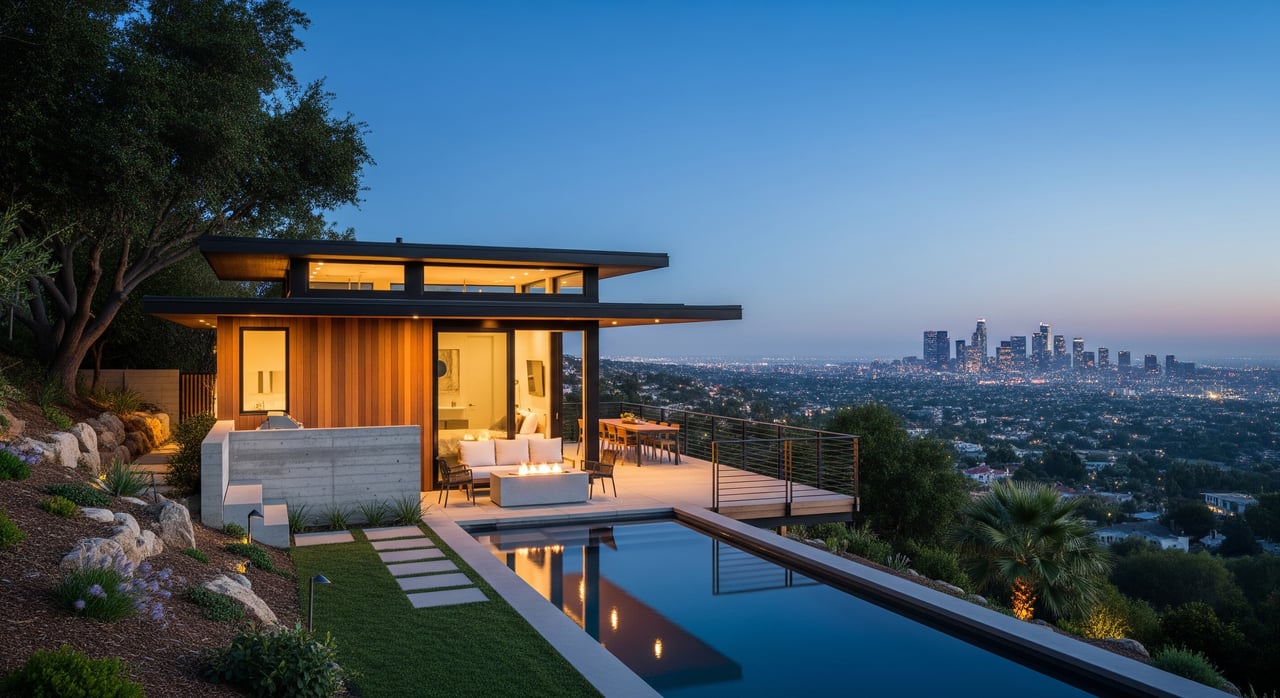
Thinking about adding an ADU in the Hollywood Hills? The views and privacy are compelling, but hillside sites come with unique rules, engineering, and logistics. You want a clear path that balances design, budget, and rental goals without surprises. In this guide, you’ll learn how ADU rules apply in Los Angeles, what hillside conditions mean for feasibility and cost, and the steps to move from idea to permits with confidence. Let’s dive in.
What an ADU can do for you
An ADU can create flexible living space for family, a home office, or a long-term rental. In the Hollywood Hills, private entries and view-friendly layouts are especially desirable to renters. Market rents vary by size, finish, and exact location, so plan with a range in mind rather than a single target number.
If you expect rental income, focus on privacy, natural light, noise separation, and safe access. These details drive demand and can help you attract quality long-term tenants.
Know the rules
California law requires cities to allow ADUs under ministerial review when you meet objective standards. The City of Los Angeles applies those baseline rules through local procedures that interact with zoning, hillside provisions, and overlay districts.
Always verify for your parcel. Confirm zoning, setback limits, height, and any overlays or Specific Plans. The Los Angeles Department of Building and Safety (LADBS) manages plan review and permits, while City Planning handles zoning and land use interpretations. Fire access and defensible space standards come from the Los Angeles Fire Department. Requirements change over time, so check current LADBS ADU packet materials, City Planning parcel information, and LAFD guidance before you design.
Hillside challenges to plan for
Building in the Hills is different from building on a flat lot. The site itself often sets the scope and budget.
Topography and grading
Steep slopes can trigger geotechnical investigations and engineered foundations. You may need retaining walls and a separate grading permit. Your plans should address slope stability, cut-and-fill, and erosion control. Expect structural engineering for significant retaining walls and careful coordination for drainage.
Access and driveways
Narrow, winding roads make construction logistics harder. Delivery trucks and cranes may face route limits, staging constraints, and time windows. LAFD standards for fire apparatus access and turnarounds can affect layout, driveway slope, and even feasibility. Long or steep driveways may require slope stabilization or additional retaining.
Parking realities
State law limits how much new parking a city can require for ADUs, and Los Angeles provides parking guidance and exemptions in many cases. That said, physical parking in the Hills is tight. Street width, existing permit rules, and practical on-site options should be evaluated early. Subterranean or steep ramped garages add cost and complexity.
Utilities and drainage
Some hillside properties have older utility laterals or tricky service locations. Plan for potential upgrades or relocations for water, sewer, gas, and electric. Your civil and architectural plans must show how stormwater will be handled without impacting downhill neighbors or public systems.
Vegetation and fire safety
Protected trees may require an arborist report and mitigation. Brush clearance, defensible space, and fire-hardening measures are typical in hillside areas. These can influence where the ADU sits and how you landscape.
Design constraints
Setbacks, height limits, floor area rules, and Hillside Ordinance provisions shape massing and placement. Stepped foundations, split-level layouts, and terraced designs are common solutions. Where overlays apply, additional review may be required, even though ADUs are generally ministerial when you meet objective standards.
Cost and schedule impacts
Hillside ADUs often cost more per square foot than backyard units on flat lots. Foundations, retaining walls, grading, and access logistics add time and trades. Expect longer plan review when geotechnical, grading, and multi-agency reviews are involved.
Permitting steps in Los Angeles
Use this sequence to reduce rework and delays:
1) Preliminary feasibility
- Confirm zoning, overlays, setbacks, and basic ADU standards with City Planning and LADBS.
- Check for hillside designations and any Specific Plan or Historic Preservation overlays.
2) Site investigations
- Order a current boundary and topographic survey showing slopes, improvements, easements, and visible utilities.
- Engage a geotechnical consultant early if slopes or retaining walls are likely. Their report informs foundations, retaining design, and drainage.
3) Schematic design
- Define size, footprint, and access path. Consider fire access, driveway slope, and defensible space.
- Test parking and trash storage locations. Plan for staging during construction.
4) Detailed plans
- Prepare architectural plans, elevations, and sections.
- Add structural drawings, foundation details, and retaining wall engineering.
- Include a grading and drainage plan with stormwater best management practices.
- Provide tree reports and LAFD compliance documentation when required.
5) Submittal and review
- Use the LADBS ADU packet and checklists to submit a complete set. Involve City Planning for zoning checks.
- Other reviewers may include LAFD, Public Works, Bureau of Engineering, LADWP, and Transportation where applicable.
6) Permits and inspections
- Respond to plan check corrections, then pull building, grading, and separate trade permits.
- Schedule inspections through construction and obtain final approvals.
Costs, timeline, and risk
Budget planning should reflect hillside realities. Major cost drivers include geotechnical work, engineered foundations, retaining walls, access improvements, and longer construction timelines. Build in contingencies for unexpected soils findings or utility upgrades.
Permitting can be a few months for simple flat-lot ADUs with complete sets. Hillside projects often require many months to complete investigations, plan preparation, and multi-agency review. Start with the right reports and a coordinated design to keep the process moving.
Key risk factors include:
- Unstable soils or deep fill that change foundation design.
- Access or fire lane constraints that require redesign or off-site improvements.
- Sewer or water capacity limitations, or challenging utility paths.
- Overlay rules that trigger added review or modify design options.
Rental use and compliance
Long-term rentals of permitted ADUs are common when the unit passes inspections and meets local standards. Short-term rentals are regulated in Los Angeles and require registration. Owner-occupancy rules for ADUs have changed over recent years, so confirm the current standard for your situation. Also review insurance needs, property tax impacts from new improvements, and any business license requirements related to rental activity.
Conversion vs attached vs detached
- Conversion: Adapting existing space, such as a garage or lower-level area, is usually the most cost-effective route and can avoid major grading or retaining.
- Attached: Adds space to the main residence. This can simplify utility connections but still requires careful structural and hillside review.
- Detached: Offers the most privacy and rental appeal but is most likely to trigger geotechnical work, engineered foundations, and more complex access and drainage.
Choose the path that fits your site constraints, budget, and rental goals. Many hillside owners start with a feasibility study comparing a garage conversion to a small detached unit.
Feasibility checklist
Use this quick list to frame your first conversations with consultants and the City:
- Confirm zoning and whether your parcel is in a Hillside Ordinance area or an overlay.
- Get a current survey and topographic map.
- Verify sewer connection location and capacity, plus water and electrical service.
- Measure driveway width, slope, and turning radius for fire access needs.
- Commission a geotechnical report if slopes or retaining walls are expected.
- Identify protected trees and plan for arborist review if needed.
- Review LADBS ADU packet and City Planning guidance for your parcel.
- Seek rough pricing from hillside-experienced ADU builders or contractors.
- Ask your insurance and tax advisors about coverage and assessment changes.
Next steps
If you are serious about an ADU in the Hollywood Hills, start with parcel-specific verification and a focused site study. A clean survey and early geotechnical input save time and money. From there, a schematic plan that anticipates fire access, drainage, and parking will streamline plan check.
If you are buying or selling with an ADU objective, align the property search or listing strategy with these realities. Homes with existing convertible space can be faster and more economical paths to a permitted unit. Homes with generous flat pads may support detached designs with better privacy and rental appeal.
When you are ready to evaluate a specific property, connect with local specialists and a real estate team that can coordinate the moving parts. If you want a tailored plan, schedule a complimentary strategy call with The Bono Group. We will help you assess feasibility, connect you with the right professionals, and position your plan around your budget and timeline.
FAQs
Are Hollywood Hills lots always eligible for an ADU?
- Not always. Many lots qualify in principle, but slope, access, drainage, protected trees, and overlay rules can make a project infeasible or costly. Verify zoning and site conditions first.
Do I need to add parking for my ADU in the Hills?
- Parking rules for ADUs are often relaxed, but physical parking is limited in many hillside streets. Check current Los Angeles ADU parking guidance and assess on-the-ground options early.
How long does permitting take for a hillside ADU?
- Simple ADUs on flat lots can move in a few months with complete plans. Hillside projects that need geotech, grading, and multi-agency review commonly take many months before permits are issued.
Will a geotechnical report be required for my site?
- It is very common on sloped parcels, especially with new foundations, grading, or retaining walls. Commissioning the report early helps your design and plan check.
Which ADU type is best on a hillside lot?
- Conversions are usually most cost-effective and face fewer site constraints. Detached units offer more privacy and rental appeal but tend to trigger more engineering and cost.
What agencies review a Hollywood Hills ADU?
- LADBS handles building and grading permits, City Planning checks zoning, LAFD reviews access and fire safety, Public Works and the Bureau of Engineering review stormwater and street impacts, and utilities confirm service capacity.